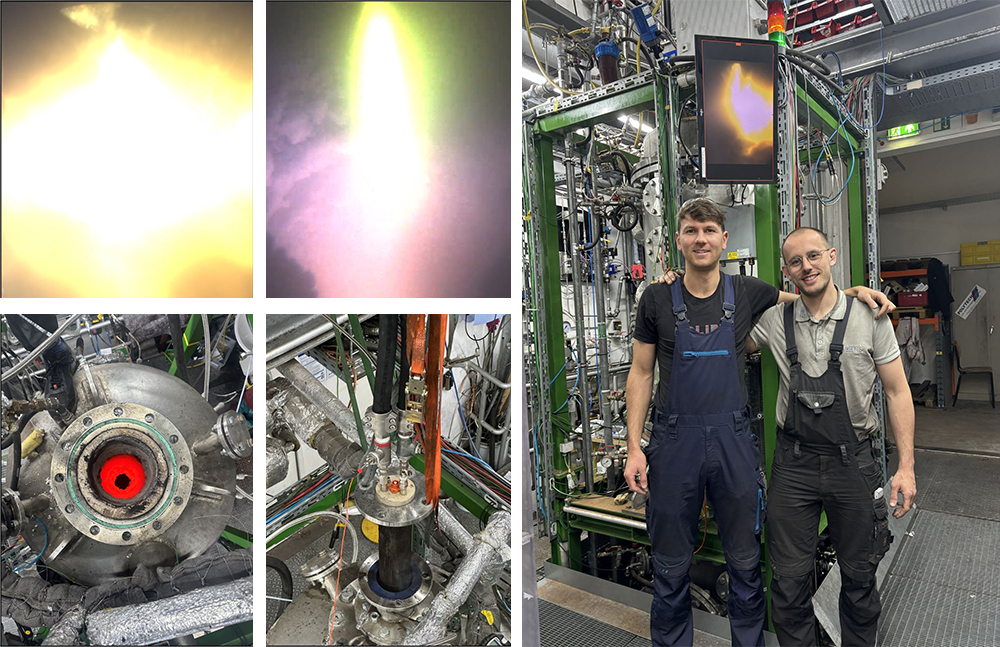
A major milestone has been achieved within the field of advanced biomass gasification. Researchers at the Technical University of Munich (TUM) have successfully completed the world's first experimental pilot-scale campaign on water steam plasma-assisted entrained flow gasification.
The experiments were carried out using the pilot gasifier facility BOOSTER, where up to 35 kW of thermal plasma power was successfully integrated into the process. This achievement enabled entirely new operating conditions and process windows that have not been accessible with conventional gasification systems.
One of the key outcomes of the campaign was the successful operation at high steam and hydrogen concentrations, creating favourable conditions for hydrogen-rich product gases and improved conversion rates. These results represent an important step towards more efficient and flexible gasification technologies that can support future sustainable energy systems.
The experimental campaign was led by Jonas Brandstetter and Johannes Waßmuth, with the support of colleagues from the Chair of Energy Systems at TUM, including Sebastian Fendt, Sebastian Bastek, Sebastian Wilhelm, Prof. Hartmut Spliethoff, as well as the laboratory and workshop teams. Additional support was provided by PlasmaAir AG, particularly Dr.-Ing. Steffen Pauly and Bernd Glocker, for the plasma system, alongside valuable contributions from Andrius Tamošiūnas and Kentaro Umeki.
This achievement was made possible through the support of several research initiatives, including the GIFFT project, funded by the European Union, demonstrating the project's contribution to advancing innovative gasification technologies for a more sustainable and resilient energy future.
Lithuanian Energy Institute
dr. Nerijus Striūgas
dr. Raminta Skvorčinskienė
dr. Andrius Tamošiūnas